Are Dixon Affordable Homes Solano County’s Best Value?
May 21, 2026
May 21, 2026
Wondering if there is still a place in Solano County where your budget can stretch a little further without feeling like you are settling? If you are comparing cities like Vacaville, Fairfield, Davis, and Dixon, that question is probably top of mind. The good news is that Dixon does stand out as a relative value option, especially for buyers who want a single-family home and a lower monthly payment. Let’s dive in.
If you are asking whether Dixon is the hidden affordable corner of Solano County, the short answer is yes, but with an important caveat. Dixon is not dramatically cheaper than every nearby market, and it is not a distressed or slow-moving market either. Instead, it tends to offer a meaningful discount compared with the cities many buyers cross-shop.
In March 2026, Dixon’s median sale price was $577,639. That compares with $598,000 in Fairfield, $628,165 in Vacaville, and $685,000 in Davis. On that snapshot, Dixon came in about $20,000 below Fairfield, about $50,000 below Vacaville, and about $107,000 below Davis.
That price gap matters most when you are payment-sensitive. For many first-time buyers or move-up buyers trying to keep their monthly costs under control, a difference of even $20,000 to $50,000 can shape what feels realistic. Dixon’s value story is strongest when you look at what you get for the money, not just the headline price.
Affordable does not always mean easier, and Dixon is a good example of that. Homes there are still moving at a healthy pace, which tells you buyers are paying attention. This is not a market where listings are sitting for months because demand is missing.
In March 2026, Dixon homes sold in a median of 27 days. That was faster than Vacaville at 45 days and Fairfield at 37 days, and very close to Davis at 26 days. So while Dixon may offer a lower entry point, it is still competitive enough that you want a clear plan before you shop.
For buyers, that means the market can reward preparation. If you are serious about buying in Dixon, having your financing lined up early can help you move with more confidence when the right home appears.
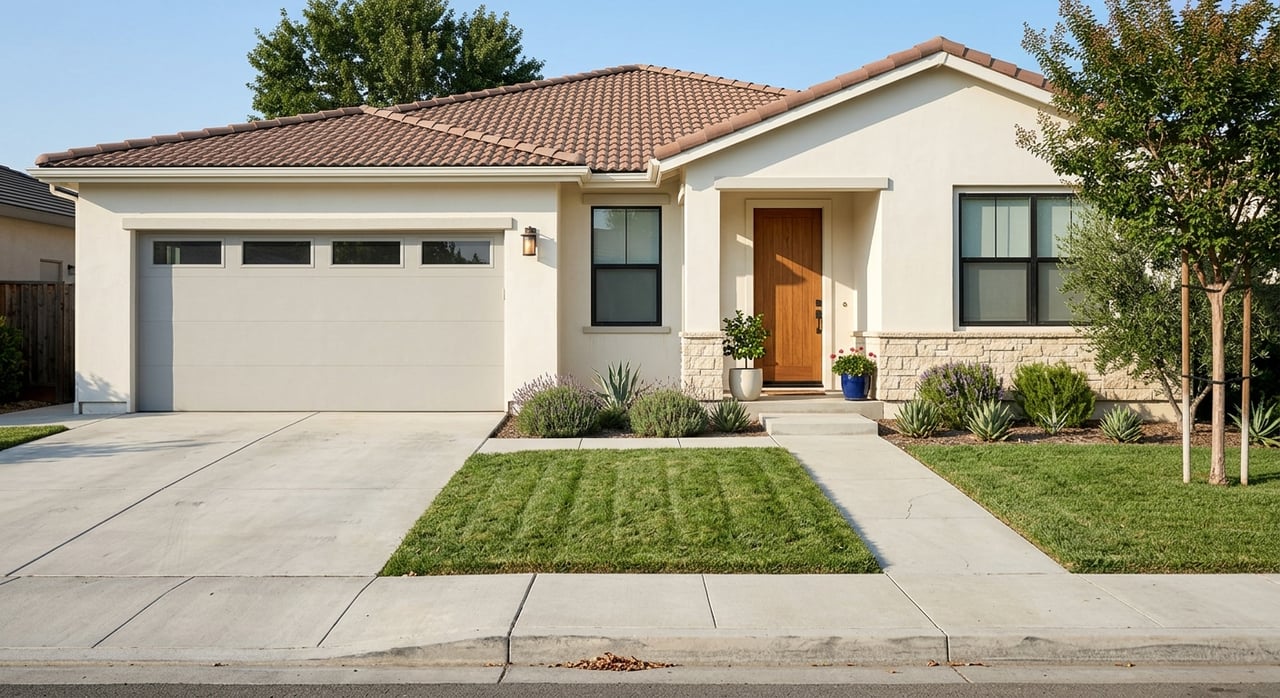
One reason Dixon appeals to value-focused buyers is its housing feel. Based on current listing examples, the market leans toward detached single-family homes, newer subdivisions, and low-maintenance suburban housing. That gives Dixon a straightforward appeal if you want a more traditional home setup.
Current examples also suggest Dixon inventory remains suburban in character. One visible example is a 2025-built home in a 55+ community on a 6,201-square-foot lot, and broader listings show homes in roughly the 1,100 to 2,100 square foot range. These are listing examples rather than citywide medians, but they help paint a practical picture of what many buyers are seeing.
Compared with the nearby cities, Dixon appears to compete more as a conventional single-family suburb than as a dense infill market. Vacaville and Fairfield also show suburban lot examples, while Davis stands out for having a broader mix that includes condos, townhomes, and multi-family units in the for-sale pipeline. If you want more housing-type variety, Davis may offer more choice. If you want a simpler suburban home search, Dixon may feel more focused.
For many buyers, affordability is not only about price. It is also about how the property lives day to day. Dixon’s visible inventory suggests a suburban pattern with practical lots and detached homes, which can appeal if you want outdoor space without moving too far from larger job centers.
That said, it helps to think of lot size as part of a broader lifestyle tradeoff. Fairfield examples range from 5,663 to 9,836 square feet, Vacaville examples include 4,792 and 5,200 square feet, and Davis examples include a 0.26-acre lot and a 6,970-square-foot lot. These are not citywide averages, but they do show that buyers in this broader region can find a range of yard sizes depending on the market and property type.
In practical terms, Dixon seems to hit a middle ground. It offers the suburban format many buyers want, while still coming in below some of the better-known alternatives on price.
This is where Dixon’s value story gets more tangible. Using a 6.36% average 30-year fixed mortgage rate from Freddie Mac for the week of May 14, 2026, and assuming 20% down, estimated monthly principal-and-interest payments look like this:
| City | Median Sale Price | Estimated Monthly P&I |
|---|---|---|
| Dixon | $577,639 | $2,878 |
| Fairfield | $598,000 | $2,980 |
| Vacaville | $628,165 | $3,130 |
| Davis | $685,000 | $3,413 |
That puts Dixon at about $252 less per month than Vacaville and about $535 less per month than Davis on principal and interest alone. For buyers trying to protect monthly cash flow, that difference can be meaningful.
Still, principal and interest are only part of the story. Your real monthly cost will also include property taxes, insurance, maintenance, possible HOA dues, and potentially mortgage insurance if your down payment is smaller. A smart affordability conversation looks at the full picture, not just the mortgage line item.
A lower home price often comes with tradeoffs, and commute pattern is one of the big ones. Dixon’s affordability case makes the most sense when you are comfortable with a driving-oriented lifestyle. If you prefer a market with more transportation options built into daily life, that may shape your decision differently.
Current Census QuickFacts show a mean travel time to work of 26.7 minutes in Dixon. That compares with 28.2 minutes in Vacaville, 30.7 minutes in Fairfield, and 23.3 minutes in Davis. So Dixon is not the longest-commute option in this group, but it also is not the shortest.
The bigger difference is how people get around. Data USA reports that 80.3% of Dixon workers drove alone, 11.9% worked from home, and 5.84% carpooled. That points to a city where driving is still the default for most households.
When buyers compare Dixon with Davis, the decision often goes beyond home price. Davis offers a more multimodal commuting environment, with strong support for biking, transit, and carpooling through the UC Davis commute ecosystem. That can be a major advantage if your daily routine depends on alternatives to driving.
Dixon offers a different kind of value. It tends to be more affordable and more suburban in visible housing stock, but it does not offer the same level of for-sale housing variety or transportation feel that buyers may find in Davis. In simple terms, Dixon may save you money on the purchase, while Davis may offer a different convenience profile.
Neither option is automatically better. It depends on what matters most to you: lower entry price, home style, lot configuration, commute pattern, or a mix of all four.
Dixon can be a strong fit if you are looking for a practical path into homeownership and you want to stay within reach of the broader Solano region. It may especially appeal if you are focused on buying a detached home and keeping your payment lower than what you might face in Davis or Vacaville.
You may want to look more closely at Dixon if you are:
Dixon may be less ideal if your top priority is a wide mix of housing types or a more transit- and bike-oriented daily routine. In that case, another market may line up better with how you want to live.
So, is Dixon the hidden affordable corner of Solano County? Yes, if you define affordable as relative value. Dixon is cheaper than Vacaville, Fairfield, and especially Davis based on recent median sale prices, and it still moves at a healthy pace. That makes it a compelling option for buyers who want more breathing room in the budget without stepping into a stagnant market.
The key is to weigh the full tradeoff set. Dixon’s appeal is not just lower price. It is the combination of lower price, suburban housing stock, practical lot sizes, and an active market. For the right buyer, that balance can make Dixon one of the more interesting opportunities in the area.
If you want help comparing Dixon with other Solano County options, pre-approving your budget, or building a smart home search strategy, Frontline Network can help you move forward with local guidance, in-house mortgage support, and a concierge-level approach.
Experience the genuine approach to real estate with Frontline Network, where success is not measured by the number of sales but by the positive outcomes we achieve for everyone we serve.
806 Bridle Ridge Drive Fairfield, Ca 94534 CLAUDIO O. BARRIENTOS | CA DRE# 02102049