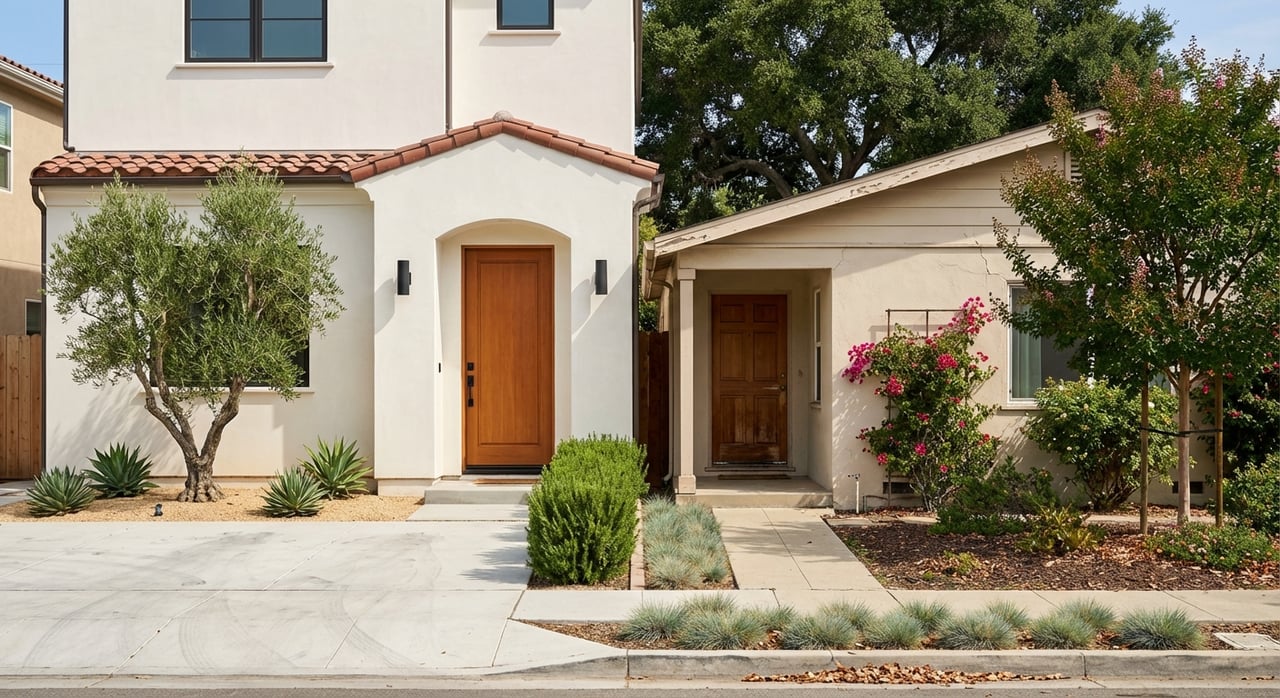
Vacaville New Construction or Resale: Find Your Best Fit
February 19, 2026
February 19, 2026
Torn between a brand‑new build and a proven resale in Vacaville? You’re not alone. With prices, timelines, and monthly costs pulling in different directions, it can be hard to know what truly fits your budget and lifestyle. In this guide, you’ll learn the key tradeoffs, see where new homes are building now, understand HOAs and Mello‑Roos, and get a simple framework to compare total monthly costs before you decide. Let’s dive in.
Vacaville’s median home value has hovered in the roughly $590,000 to $620,000 range in recent snapshots, and homes are taking a bit longer to sell than during the peak pandemic years. Treat any number you see as time‑sensitive and double‑check with fresh MLS data when you’re ready to shop. Local news continues to highlight regional cost pressures and demand across Solano County, which helps explain why some buyers consider new builds for efficiency and amenities while others prioritize resale value and lot size. You can see that affordability context in recent Bay Area coverage of housing pressures in Vacaville and Solano County.
You may also see activity in areas like Roberts Ranch and Carmello, with releases that change by phase and builder. Always verify current pricing and incentives directly with the builder’s sales office before you schedule design selections.
New Vacaville homes commonly offer modern floor plans, energy‑efficient systems, smart‑home features, and builder warranty coverage. You also gain the convenience of choosing design finishes, often with options for larger garages or flexible spaces. Review each community’s included features versus upgrades, which you can preview on many builder plan pages like the Pulte example above.
Builder ads often show a lower “price from” for base plans. Your contract price may rise with lot premiums, structural options, and design upgrades. Before you fall in love with a model, ask for a detailed estimate that shows base price, the specific lot premium, and a realistic upgrade package. Builder pages, such as The Pointe’s overview, are a good place to confirm how “from” pricing works and what is optional.
Vacaville’s resale market spans older neighborhoods near downtown, 1990s and 2000s subdivisions, and pockets with larger lots and mature landscaping. You’ll often see more variation in home age and price by street. Many buyers prioritize resale for established neighborhood character and the potential for a lower price per square foot compared with new phases at similar sizes.
Resales can deliver immediate occupancy and a yard that already feels grown in. You may also inherit near‑term maintenance needs, such as a roof, HVAC, windows, or cosmetic updates. On the flip side, a new build can offer lower maintenance in the early years, modern systems, and warranty coverage, though the base price and recurring HOA or CFD charges may increase your monthly costs.
A smart way to compare a new build to a resale is to line up every monthly line item. Use the same term length and a current interest rate for each option, then compare the totals.
Tip: If you expect to move again within 3 to 7 years, model total costs over that time horizon, not just the first year. That makes rate buydowns, HOAs, and CFDs easier to compare.
Vacaville sits on I‑80 between Sacramento and the Bay Area, with the freeway as the main commute spine. As of February 2026, the typical off‑peak drive to Sacramento can run about 35 to 45 minutes, while peak travel to San Francisco often ranges from roughly 1 to 1.5 hours, depending on traffic. Recent express lane projects along I‑80 through Fairfield and Vacaville can improve travel time reliability for some drivers; review current operations and tolling details in the I‑80 corridor notes. Rail travelers can access Capitol Corridor connections via the Fairfield‑Vacaville station on Vanden Road.
Many builders advertise incentives tied to using a preferred or affiliated lender, such as closing‑cost credits, temporary rate buydowns, or design‑center credits. These can reduce upfront cash or your first‑year payment, and working with a team that closes lots of builder loans may streamline coordination. For a quick primer on common benefits and tradeoffs, see this overview of builder preferred‑lender programs.
Be sure to compare the full APR and total cost, not just the monthly teaser. A credit on closing day can be outweighed by a higher long‑term interest rate or added fees. Some offers also require certain credit scores, down payments, or loan types to qualify. See this guide to builder mortgage pros and cautions for what to check.
Important: Builders cannot require you to use an affiliated lender. Affiliated business arrangements are regulated, and you should receive the proper disclosures. Review the CFPB’s rule on affiliated business arrangements and always shop at least two independent lender quotes alongside any builder offer.
Most new homes come with staged warranty coverage, often one year for materials and workmanship, several years on major systems, and a longer structural warranty that can run up to 10 years. Ask how claims are handled, which items are covered, and how manufacturer warranties interact with the builder’s policy. On long‑term value, remember that lot size, location, commute access, and community amenities are key drivers when it is time to sell, whether you buy new or resale.
Choose new construction if you want:
Choose resale if you want:
Use this checklist to protect your budget and avoid surprises:
If you want a clear, side‑by‑side comparison tailored to your budget, we can build it with you. At Frontline Network, our in‑house loan team delivers fast pre‑approvals, we model total monthly costs for both new and resale options, and we guide you through HOAs, Mello‑Roos, and builder contracts with confidence. Hablamos Español. Ready to run the numbers and tour the right homes? Frontline Network — Get Pre‑approved & Book a Consultation.
Experience the genuine approach to real estate with Frontline Network, where success is not measured by the number of sales but by the positive outcomes we achieve for everyone we serve.
806 Bridle Ridge Drive Fairfield, Ca 94534 CLAUDIO O. BARRIENTOS | CA DRE# 02102049