Richmond Starter Homes Guide for First-Time Buyers
January 1, 2026
January 1, 2026
Buying your first place in Richmond can feel overwhelming. You want a smart entry point, a manageable monthly payment, and a location that fits your life. The good news is Richmond offers a range of starter options, from classic bungalows to low-maintenance condos, with transit choices that make Bay Area commutes workable. In this guide, you’ll learn how the main home types compare, what to look for in HOAs and inspections, and how to prepare a competitive offer without unnecessary risk. Let’s dive in.
A starter home in Richmond is usually a smaller single-family bungalow, a townhome, or a condo. Each option balances price, privacy, maintenance, and commute differently. Your ideal fit depends on how you weigh space, monthly costs, and convenience. Start by clarifying what matters most for your daily life and your budget.
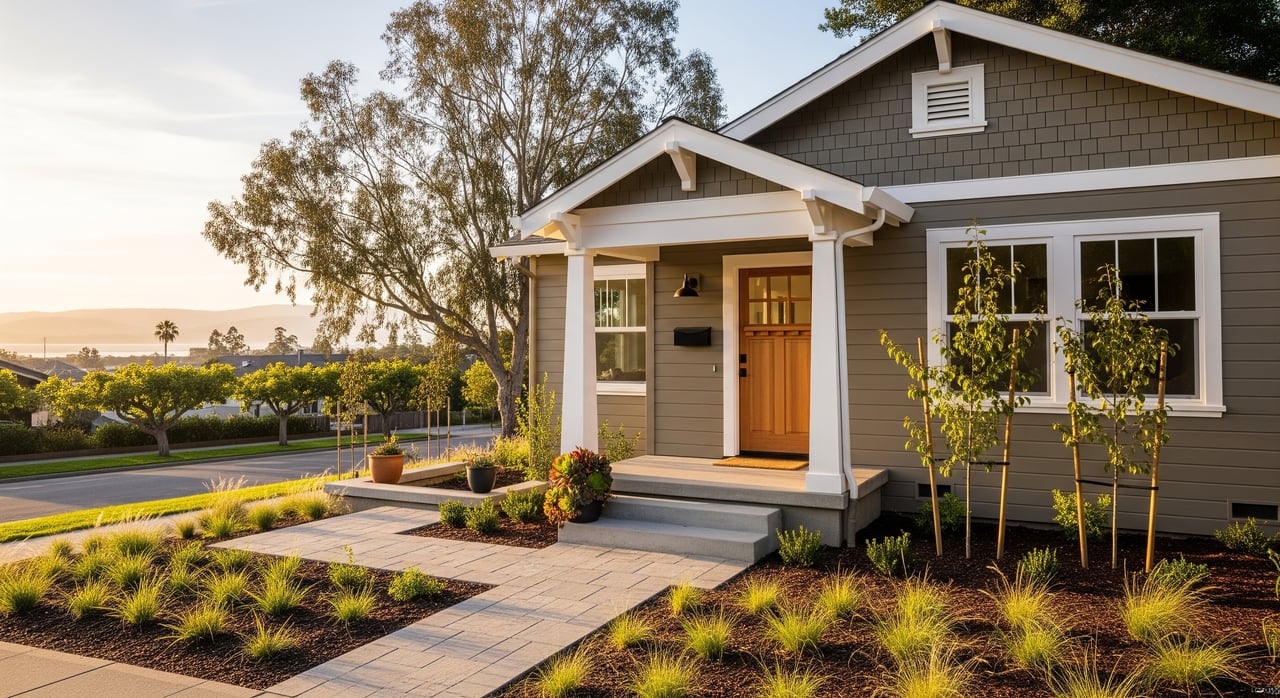
Small detached homes from the early and mid 1900s are common in areas like Point Richmond, Richmond Annex, and parts of Richmond Heights. You get a yard, more privacy, and freedom to improve the property over time. Many buyers like the potential for expansion or even an ADU down the line. The tradeoffs are higher maintenance responsibility and older systems that may need updating.
Common issues to expect include aging roofs, older wiring such as knob-and-tube, ungrounded outlets, galvanized plumbing, and wood-destroying-organism damage. In hillside locations, pay close attention to foundation movement and drainage. If the home was built before 1978, plan for lead-based paint precautions. These items are manageable with the right inspections and budgeting.
Townhomes can offer more space than a condo, often with a garage or small yard, and lower exterior upkeep than a detached house. They appear in planned communities and hillside developments across the city. Some are legally condos and some are classified as PUDs, which affects lending and insurance.
Ask your agent and lender to confirm how the property is titled and what the HOA covers. Noise transfer between shared walls, roof drainage, and grading at foundations are common items to check. HOA rules and fees vary, so factor those into your monthly cost.
Condos are common in Marina Bay and near downtown. They tend to have the lowest entry price, minimal exterior maintenance, and proximity to amenities. You will rely on an HOA to maintain the building and shared spaces.
Financing for condos depends on the project’s financial health. Many lenders require the building to be “warrantable,” with adequate reserves and owner occupancy. If a project is non-warrantable, your loan options may narrow. Review the HOA’s CC&Rs, bylaws, current budget, reserve study, recent meeting minutes, insurance declarations, and any pending litigation or special assessments before you commit.
Neighborhoods evolve over time. Review current city planning updates, environmental context, and public data before deciding. The City of Richmond’s housing and community pages are a useful starting point for local program and planning information.
Richmond has multiple transit modes that can reduce reliance on driving. The Richmond BART station provides direct connections into the East Bay and San Francisco. If you work in the city, the Richmond terminal offers scheduled service via the San Francisco Bay Ferry. Local and transbay buses through AC Transit and WestCAT expand your reach to nearby job centers.
Consider the tradeoff between a shorter walk to transit and the impacts of rail, port, or industrial activity nearby. If you drive, factor in peak-hour congestion on I-80 and regional arteries. Try a test commute during your typical travel times to validate your choice.
HOA fees cover common-area maintenance, master insurance, reserves, and sometimes utilities. Fees vary and affect your total monthly cost. Always examine the HOA’s budget, reserves, and meeting minutes to see how well long-term projects are planned.
Watch for red flags like low reserves, recent or pending special assessments, or litigation. Review the master insurance policy, including deductibles, and confirm your HO-6 policy needs. If you plan to finance with FHA, VA, or certain conventional loans, verify early that the project meets your lender’s requirements.
Most first-time buyers use conventional, FHA, or VA loans. FHA has specific property standards, which can affect older bungalows that need repairs. Your lender will outline what is feasible for your situation.
California statewide programs can help with down payment and closing costs for eligible buyers. Explore current first-time buyer offerings through the California Housing Finance Agency (CalHFA). Local programs may also be available through county or city agencies, and eligibility changes over time. Start this conversation early so you know your options before you tour.
In the Bay Area, sellers look for clarity and certainty. A written pre-approval is stronger than pre-qualification and shows you are ready to perform. Earnest money is customary and the amount is negotiable.
Contingencies are common for inspection, appraisal, and loan. In competitive moments, some buyers shorten or remove contingencies to win. This increases risk, so discuss each option with your agent and lender. Tools like escalation clauses or appraisal-gap coverage can help, but they should fit your budget and risk tolerance.
California sellers typically provide a Transfer Disclosure Statement and a Natural Hazard Disclosure report. Review them closely and ask questions about any noted defects or hazards. You can learn more about real estate regulations and consumer protections through the California Department of Real Estate.
Order a general home inspection plus a wood-destroying-organism inspection. Depending on property type, you may add roof, sewer, structural, HVAC, or environmental checks. In Richmond, common concerns include roof condition, drainage, older electrical or plumbing systems, water heater bracing, and possible foundation issues in hillside areas.
The NHD report will flag mapped hazards like flood zones, fire hazard severity, or earthquake fault zones. Richmond’s industrial heritage and proximity to the refinery, port, and rail corridors make environmental context an important part of due diligence. For properties near known former industrial uses, specialized environmental review can be prudent, especially if you plan significant renovations.
If you want a simple path to your first Richmond home, start with financing clarity and a clear set of must-haves. From there, compare home types and neighborhoods against your commute and lifestyle. With a solid pre-approval and a focused search, you can compete with confidence and protect your long-term goals.
Ready to talk strategy, get pre-approved, and see tailored options? Connect with Frontline Network for end-to-end guidance, in-house loan support, and a calm, concierge process. Hablamos Español.
Experience the genuine approach to real estate with Frontline Network, where success is not measured by the number of sales but by the positive outcomes we achieve for everyone we serve.

806 Bridle Ridge Drive Fairfield, Ca 94534 CLAUDIO O. BARRIENTOS | CA DRE# 02102049