Sunset Night Market on Irving Street: What's Different Now
September 10, 2026
September 10, 2026
Why would a family grocer keep a "Grand Opening" banner hanging over its door for more than a decade after opening? On Irving Street, in San Francisco's Sunset District, that question has a real answer, and it says more about how this neighborhood actually works than any recap of the Sunset Night Market's return ever could.
The market itself is a smaller story than most people think. It launched in 2023 as a three-block gathering that drew more than 10,000 people in its first year, expanded for 2024, then vanished entirely for 2025 after getting tangled in a fight that had nothing to do with food vendors or mooncakes. It's back now, but the version returning to Irving Street on September 25 for Autumn Moon Festival is a different animal from the one that made headlines two years ago, and understanding why tells you something useful about who actually shapes public space in this neighborhood.
The Sunset Night Market started small: three blocks of Irving Street, community-organized, built around food and local makers, drawing more than 10,000 people to that first 2023 event. By 2024, the newly formed Sunset Night Market Collaborative had expanded the event's footprint, and across its first two years the market pulled tens of thousands of visitors to seven blocks of Irving Street.
Then it collided with the Great Highway. Supervisor Joel Engardio, a vocal backer of the night market, had also championed Proposition K, the ballot measure that permanently closed a two-mile stretch of the Great Highway to cars and converted it into the park now known as Sunset Dunes. Citywide voters passed the measure by 54 percent, but west-side residents were furious over the closure, and Engardio found himself facing a recall campaign built substantially on that anger. Some Sunset merchants who supported the recall reportedly pulled their backing from the night market too. Lily Wong, the event's lead organizer and director of the Sunset Chinese Cultural District, later pointed to a second strain on top of the politics: the event had grown large enough that some organizers found it hard to manage, and delayed city reimbursements for the 2024 markets left the collaborative waiting on money it needed to cover costs. The 2025 markets never happened.
Into that gap stepped a different group entirely. A neighborhood advocacy organization called Dear Community teamed up with Smokin D's BBQ, a Sunset restaurant, to run their own three-block event called Sunset After Dark on September 26, 2025. Spokesperson Rob Aiavao, quoted by the San Francisco Chronicle, described it as a "celebration of food, culture, small business and the incredible people who make the Sunset special," organized separately from the paused city-backed market but drawing on many of the same vendors and volunteers. It was the neighborhood's answer to a question nobody had asked out loud: if the big market disappears, does the street still throw a party for itself? The answer was yes, just at a smaller scale and without a City Hall budget line behind it.
The market that came back for 2026 isn't a revival of the 2024 version. The Sunset Chinese Cultural District took over formal stewardship, and, as The San Francisco Standard reported, Wong said: "This time, we're doing more Chinese cultural programming." Instead of two big summer dates, the market now runs four times a year, each tied to a specific Chinese cultural holiday, and each scaled to five blocks of Irving Street between 20th and 25th Avenues rather than the sprawling seven-block footprint of its peak.
Here's what that calendar actually looks like for 2026:
| Date | Occasion | Status as of September 7, 2026 |
|---|---|---|
| February 27 | Lunar New Year | Already held |
| June 12 | Dragon Boat Festival | Already held |
| September 25 | Autumn Moon Festival | Upcoming |
| December 11 | Winter Solstice (Dong Zhi) | Upcoming |
The September date is the one worth circling. Autumn Moon events tend to draw families specifically, built around mooncakes, lanterns, and the kind of multigenerational crowd that a Lunar New Year market in February doesn't always get on a cold weeknight. When the market relaunched in February, organizers paired it with a new program called Taste of Irving, built specifically to steer foot traffic into the corridor's sit-down restaurants and shops rather than just the temporary vendor booths. The push makes more sense once you know what happened during the market's earlier boom years: some restaurants and vendors near Irving Street flourished on market nights, while others, like dry cleaners and salons, saw noticeably less daytime business as the street reorganized itself around evening crowds.
Walk the Ninth Avenue and Irving Street corridor in the Inner Sunset on an ordinary Wednesday and you'll find a version of neighborhood vitality that has nothing to do with any scheduled market. A food writer documenting the corridor found Kothai Republic, which opened in 2022 serving modern Asian cuisine, packed at 7 p.m. on a Wednesday, a night that would surprise no one on a Friday but stands out midweek. A family celebrated a birthday over a whole butterflied branzino at the corner table. Two women shared stories over crudo near the entrance.
What makes the Inner Sunset's food scene notable isn't that new places like Kothai Republic, Mixt, and Cachè have opened. It's that they've opened alongside longtime anchors like Art's Cafe, Yellow Submarine, San Tung, and Arizmendi Bakery, all of which are still there, still full, still doing the thing they've always done. This isn't a neighborhood where new money displaced the old guard. It's one where both generations are running businesses at the same time on the same few blocks, which is a much harder trick to pull off than either a boom or a teardown.
Head further out Irving Street, past 20th Avenue into the market's actual footprint, and the texture changes. This stretch is denser with Chinese grocers, and, as Mission Local reported, a lot of them still fly "Grand Opening" banners years after their doors first opened. Janet Zeng's shop, Siu Wah Food at 2102 Irving Street, opened in August 2021 after she spent eight months paying rent on an empty storefront while waiting on city permitting. The banner is still up. A few doors down, Akina Zheng now runs a second seafood shop, 2130 Irving Seafood Market, after opening her original location, 2227 Irving Seafood Market, back in 2015. That original location's Grand Opening banner is now covered in dust with fraying edges, and when a reporter asked the manager why it was still there more than a decade later, he laughed and said in Mandarin that there was no need to take it down.
Ivan Light, professor emeritus of the sociology of immigration at UCLA, told Mission Local that removing the banner could make a business "another invisible grocery store in a sea of invisible grocery stores." It's not nostalgia keeping those signs in place. It's competitive signaling in a market where four businesses are all selling roughly the same fish out of roughly the same-sized storefronts.
Not everyone on the street agrees with that instinct. Steven Lee, who co-owns a newer crafts cafe called Sunset Commons, wanted his own Grand Opening sign down within a month. His wife Carmen sees it differently: "It's interesting, because I do view myself as a scrappy business person." The disagreement inside one couple's business is a pretty good snapshot of a street where two different generations of merchants are running two different playbooks at the same time, on the same stretch of Irving Street.
If you're planning to walk Irving Street for Autumn Moon this year, expect something closer to the neighborhood-scaled version from 2023 than the seven-block spectacle from 2024. Five blocks, between 20th and 25th Avenues, five to ten p.m. Hole in the Wall Pizza, whose owner Awadalla Awadalla told The San Francisco Standard the market's 2025 absence was "very bad" for business, will presumably be glad to see foot traffic back on the block.
The bigger takeaway isn't really about one night in September. It's that Irving Street's daily character, the restaurant lines in the Inner Sunset, the Grand Opening banners further west, the block-by-block turnover documented by the Richmond Review and Sunset Beacon's own Then and Now photo comparisons showing 1980s neon signage for Pacific 5 & 10 and Lawton Pet Shop replaced by newer names like Kiss of Matcha, Bangkok House Thai Noodles, Sunrise Deli, and 22nd and Irving Market, was never dependent on a single citywide event surviving a political fight. The market matters as a barometer for who currently holds influence over Irving Street's public calendar. The street itself keeps its own rhythm regardless of who's running the block party.
If you're already living here, you already knew the food was good. What's worth knowing now is why the market almost disappeared, who stepped in to fill the gap when it did, and why the version coming back this month looks different on purpose.
Whether you're already a Sunset homeowner watching this corridor evolve or you're weighing a move somewhere else in the Bay Area entirely, Frontline Network pays attention to the details that make a neighborhood worth choosing. Reach out anytime you're ready to talk through what's next, in English or Spanish. Get Pre-approved & Book a Consultation whenever the timing works for you.
Experience the genuine approach to real estate with Frontline Network, where success is not measured by the number of sales but by the positive outcomes we achieve for everyone we serve.
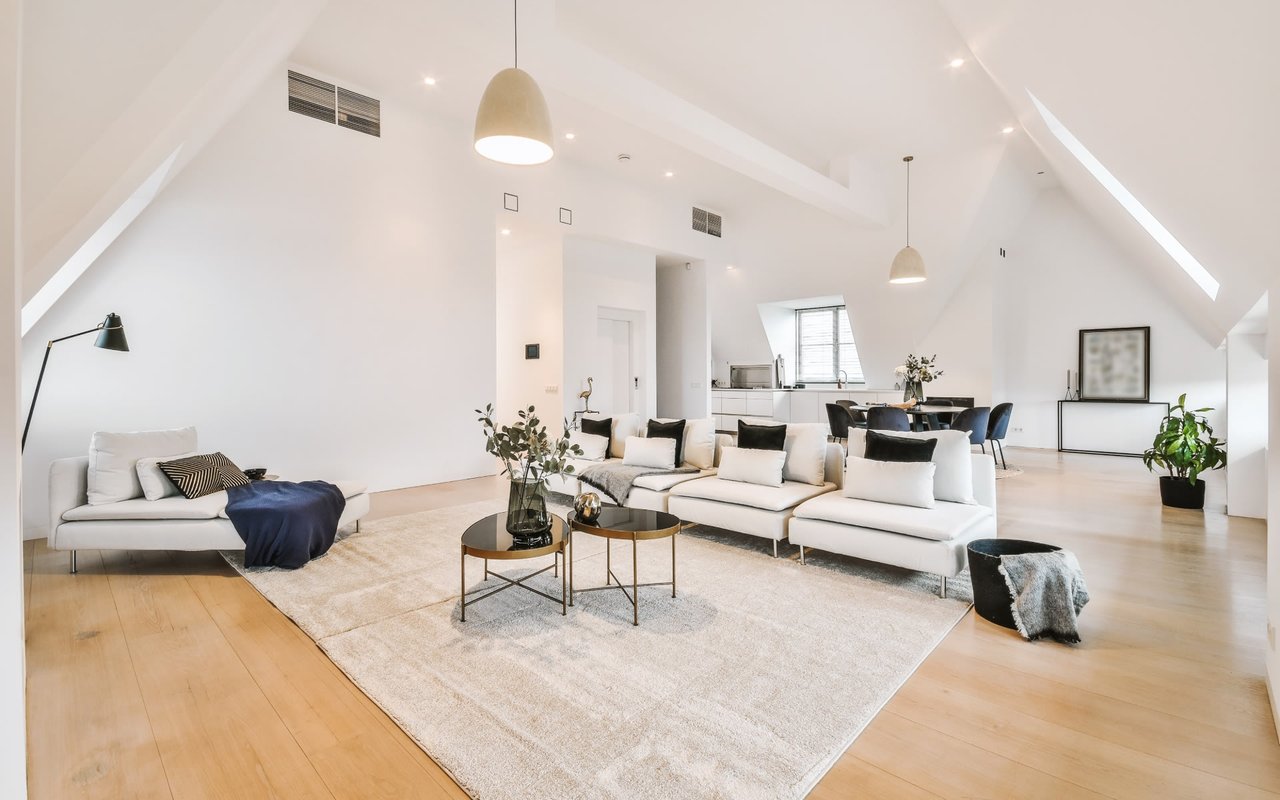
806 Bridle Ridge Drive Fairfield, Ca 94534 CLAUDIO O. BARRIENTOS | CA DRE# 02102049